
Your bridal necklace set is the first thing people notice when you walk into the mandap. It sits right at the centre of your look — framing your face, completing your outfit, and carrying a weight of tradition that no other piece of jewellery quite matches. And yet, most brides find choosing one genuinely overwhelming.
There are hundreds of styles — chokers, long haars, layered sets, Jadau, Kundan, Meenakari, antique gold, two-tone — and no two look the same on two different brides. So how do you find the one that is truly right for you?
This guide answers exactly that. We cover every type of Indian bridal necklace set, how to match it to your outfit and occasion, what to look for when buying, and our handpicked recommendations from the Mangalsutra Bangles Necklace Set Collection.
What's Inside This Guide
- What Is a Bridal Necklace Set?
- Types of Indian Bridal Necklace Sets
- Necklace Lengths — Which One for Which Occasion?
- How to Match Your Necklace Set with Your Outfit
- What to Look for When Buying a Bridal Necklace Set
- Our Handpicked Bridal Necklace Sets
- How to Style a Bridal Necklace Set
- Care Tips — Keep Your Necklace Looking New
- Frequently Asked Questions
1. What Is a Bridal Necklace Set?
A bridal necklace set is a coordinated jewellery ensemble that typically includes a necklace — and often matching earrings, and sometimes a maangtikka or passa — designed to be worn together for a unified, complete bridal look. Unlike everyday jewellery, a bridal necklace set is built for occasion: the craftsmanship is more detailed, the stones are more prominent, and the design is made to hold its presence even in a room full of people.
In Indian weddings, the bridal necklace set carries deep cultural significance. It is one of the solah shringar — the sixteen adornments of an Indian bride. Depending on your region and community, the necklace may be a short choker worn close to the throat, a layered set that cascades down the chest, or a long mangalsutra-style haar that reaches the navel.
What makes a necklace set different from a standalone necklace is the intentional coordination of all pieces. When a set is designed well — as ours are, in our Surat workshop — every element speaks the same visual language, so you do not have to worry about whether your earrings match. It is all thought through for you.
2. Types of Indian Bridal Necklace Sets
The world of Indian bridal necklace sets is vast and regional. Here is a breakdown of the most important types, what makes each unique, and who each one is best for.
Jadau Necklace Set
Jadau is one of India's oldest jewellery traditions, originating in the royal ateliers of Rajasthan and Gujarat. The technique involves pressing uncut gemstones — kundan, polki, or semi-precious stones — directly into a gold-plated base without the use of prongs or claws. The result is a seamless, almost mosaic-like surface that glows with colour and depth.
Jadau necklace sets have a weight to them — both literally and visually. They are the choice of brides who want their jewellery to make a statement without being loud. The craftsmanship speaks for itself. If your lehenga or saree has intricate embroidery, a Jadau set holds its own beautifully alongside it.
Kundan Necklace Set
Kundan is closely related to Jadau but uses highly refined gold as the setting medium. The stones — traditionally uncut diamonds, though now often glass or semi-precious stones — are set in a bed of pure gold foil, giving Kundan its characteristic warm, lustrous look. Kundan sets tend to be flatter and more geometric than Jadau, which makes them sit elegantly close to the neckline.
Antique Gold Necklace Set
Antique gold jewellery is treated or finished to give it a warm, aged appearance — the look of heirloom jewellery that has been passed down through generations. The oxidised finish brings out the fine detailing in the design, whether that is temple motifs, peacock patterns, floral engravings, or geometric borders. Antique gold sets are particularly beloved in South Indian bridal traditions and are seeing a huge revival among brides across all regions who want a heritage feel without the weight of solid gold.
Choker Necklace Set
A choker sits high on the neck — typically two to three fingers above the collarbone. It is a bold, architectural choice that draws attention to the face and neckline. Chokers work best with deep necklines, off-shoulder blouses, and boat necks. They are increasingly popular for reception and cocktail events, where the bride wants a more fashion-forward look alongside her wedding day ensemble.
Layered Haar (Multi-Strand Set)
A layered bridal set combines two or more necklaces of different lengths worn together — a choker or short necklace at the top, a mid-length piece in the middle, and sometimes a long haar or mangalsutra at the bottom. The layered look is iconic in North Indian and Rajasthani bridal traditions and gives the bride a sense of jewellery abundance that is deeply associated with bridal richness.
Temple Jewellery Set
Originating in South India, temple jewellery is characterised by motifs of deities, lotus flowers, peacocks, and other sacred symbols — originally crafted for temple idols and later adopted by classical dancers and brides. Temple necklace sets are typically heavy gold-plated pieces with red and green enamel accents. They are the signature look of Bharatanatyam dancers and Tamil, Telugu, and Kannada brides.
Two-Tone (Gold and Silver) Necklace Set
A contemporary favourite — two-tone jewellery combines gold and silver plating in a single design, creating a versatile, modern piece that pairs effortlessly with both warm and cool-toned outfits. Two-tone sets are especially popular with NRI brides who want something that bridges Indian tradition and Western aesthetics.
3. Necklace Lengths — Which One for Which Occasion?
One of the most practical decisions you will make is the length of your necklace — because the same design in a different length will look completely different on your body and with your outfit.
| Length | Where it sits | Best for |
|---|---|---|
| Choker (14–16") | High on the neck, above the collarbone | Deep necklines, off-shoulder blouses, reception looks |
| Princess (17–19") | Just below the collarbone | Round and V-necks, everyday bridal events, most versatile |
| Matinee (20–24") | At or just below the chest | High necklines, sarees, layered looks |
| Opera / Haar (28–36") | Below the chest, near the waist | Traditional bridal, layering as the bottom piece, sarees |
Tip from our workshop: If you are wearing a heavily embroidered blouse with a high neckline, go shorter — a choker or princess-length sits above the embroidery and does not compete with it. If you have a plain or simple neckline, a longer haar or layered set fills that space beautifully.
4. How to Match Your Necklace Set with Your Outfit
This is where most brides spend the most time — and for good reason. Your necklace set needs to work with your outfit's colour, your blouse neckline, and the overall weight of your look. Here is how to think about each:
Matching the metal tone
If your outfit has gold zari embroidery, a gold-plated necklace set will be the most harmonious choice. If your embroidery has silver threads or your outfit is in a cool tone (blues, greens, greys), a silver-toned or two-tone set will integrate more naturally. Antique gold works especially well with deep jewel tones — burgundy, navy, forest green — because it adds warmth without overwhelming the colour of the fabric.
Matching the embroidery style
Heavy embroidery (zardozi, gota patti, heavy stonework) calls for jewellery that is equally rich — Jadau, Kundan, or a full layered set. Light embroidery or plain fabric gives you room to let the necklace be the hero — this is where a single, beautifully crafted statement piece shines more than a layered look.
Matching your neckline
- Round neck or high neck: Go with a choker or short necklace that sits above the neckline, or skip a necklace altogether and focus on statement earrings.
- V-neck or sweetheart: A princess-length necklace that traces the neckline is the most flattering choice.
- Deep or off-shoulder: A choker draws the eye up and frames the face beautifully.
- Saree blouse: Almost any length works — the saree itself creates a natural frame.
Matching the occasion
Not every wedding function calls for the same necklace. Your mehendi look can be lighter — a delicate Kundan or gemstone set. Your sangeet can go bolder and more fashion-forward. Save the heaviest, most elaborate set for the main wedding ceremony. And for the reception, a choker or contemporary two-tone set gives you a fresh, polished look without repeating your ceremony jewellery.
5. What to Look for When Buying a Bridal Necklace Set
Buying a bridal necklace set is a significant decision. Here is what actually matters beyond how it looks in a photograph:
Weight and comfort
You will be wearing this for anywhere from six to twelve hours on your wedding day — through the ceremony, photographs, meals, and dancing. A necklace that looks beautiful but weighs 400 grams will leave you with neck pain by the time the pheras begin. Ask about the weight of the piece before buying. Well-crafted gold-plated sets are significantly lighter than solid gold while maintaining a comparable visual presence.
Clasp and closure quality
The clasp is the most stress-tested part of any necklace. It is opened and closed dozens of times, pulled at accidentally during wear, and needs to stay secure even when you are dancing. A good-quality spring-ring clasp or lobster clasp in a bridal necklace is non-negotiable. Always test the clasp before committing to a piece.
Stone setting security
In Jadau and Kundan sets, the stones are pressed into the base rather than held by prongs. This means the setting quality depends entirely on the skill of the artisan. Gently press each stone with a fingernail — it should not move or feel loose. Stones that shift during handling will fall out during wear.
Plating quality
For gold-plated sets, the quality of the plating determines how long the piece stays looking new. Thin, low-quality plating will turn green or tarnish at contact points — the clasp, the back, and anywhere the piece rubs against skin — within a few wears. Look for sets with thick, even plating that does not show base metal at the edges. At Mangalsutra Bangles, we use heritage plating techniques developed over three decades for exactly this reason.
The maangtikka and earring match
When buying a set, always check that the earrings and maangtikka (if included) match not just in colour but in the density and style of the work. A heavy Jadau necklace paired with a thin, plain gold maangtikka will always look mismatched, no matter how individually beautiful each piece is. The set should tell a single, coherent story.
6. Our Handpicked Bridal Necklace Sets
Every necklace set in our collection is handcrafted in our Surat workshop by artisans who have spent decades mastering their craft. These are three sets that our brides return to again and again — each one made for a different kind of bride.
Heritage Jadau and Gemstone Beads Choker Set
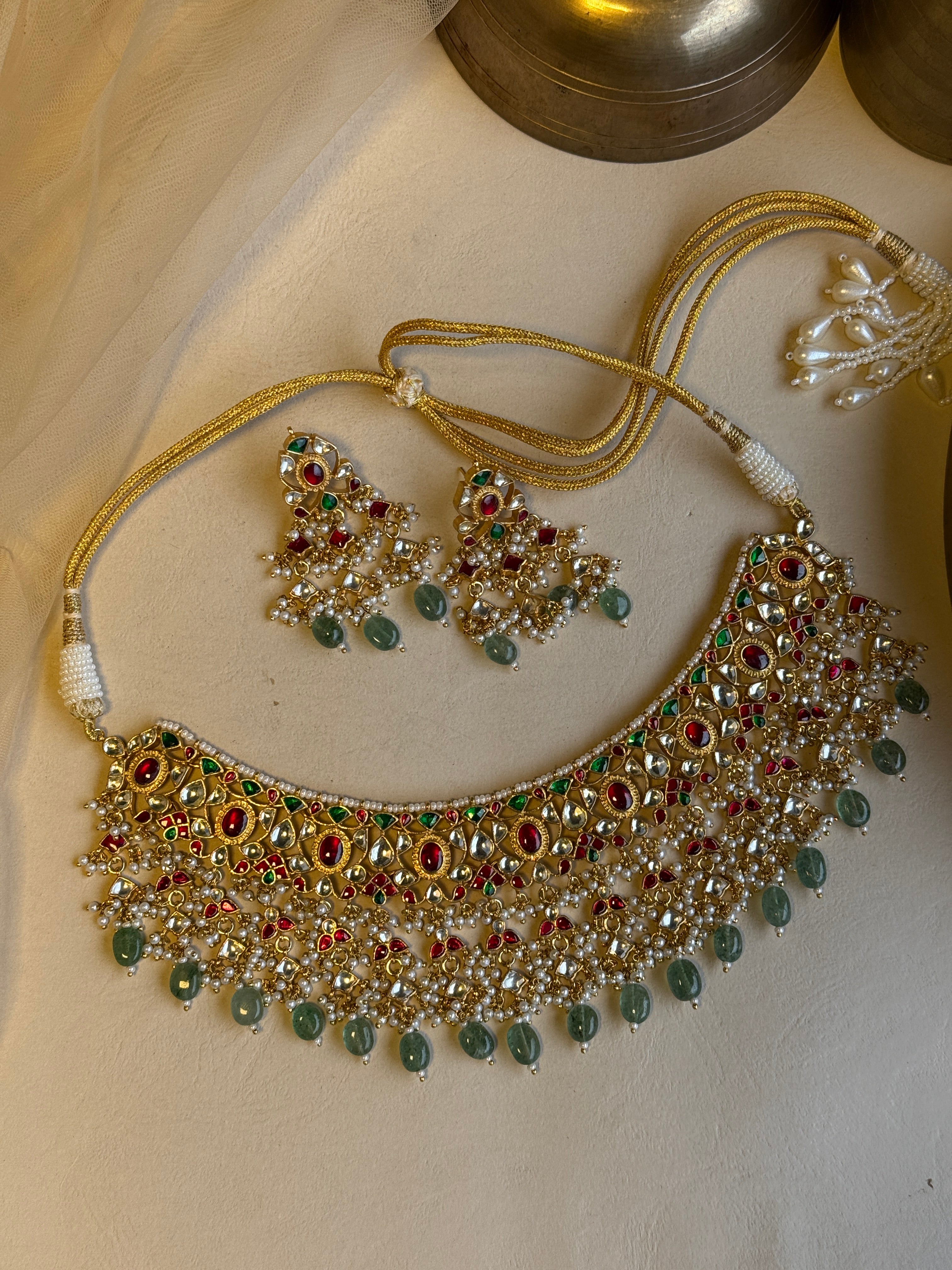
This is a piece that commands a room without saying a word. The choker format sits high and close to the neck — architectural, bold, and unmistakably bridal. The Jadau setting brings the warmth and depth of a centuries-old craft, while the gemstone bead detailing adds colour and movement that catches light beautifully. Heritage Jadau work like this takes skill and time that few jewellers still invest in — at Mangalsutra Bangles, it is something we have been doing since 1992.
Best for: Brides with deep or off-shoulder necklines, reception looks, brides who want their necklace to be the undisputed centrepiece of their entire bridal look. Pairs beautifully with heavy silk sarees and velvet lehengas in jewel tones.
Antique Gold Plated Necklace Set with Peacock Motif
Note: Please update this image with the correct product photo.
The peacock is one of the most beloved motifs in Indian jewellery — and for good reason. It carries the grace and vibrancy of Indian culture in a single, instantly recognisable form. This antique gold-plated set features the peacock motif with the depth and shadow that only an oxidised finish can give. Where bright gold can sometimes feel flat in photographs, antique gold has texture and dimension that photographs extraordinarily well — an important consideration for brides who care about how their jewellery looks in their wedding album.
Best for: South Indian brides, brides wearing warm-toned outfits (ruby red, mustard, deep orange, forest green), heritage and temple-themed weddings, and anyone who loves the classic Indian motif vocabulary done with real craft.
Gold and Silver Heritage Necklace Set with Maangtikka
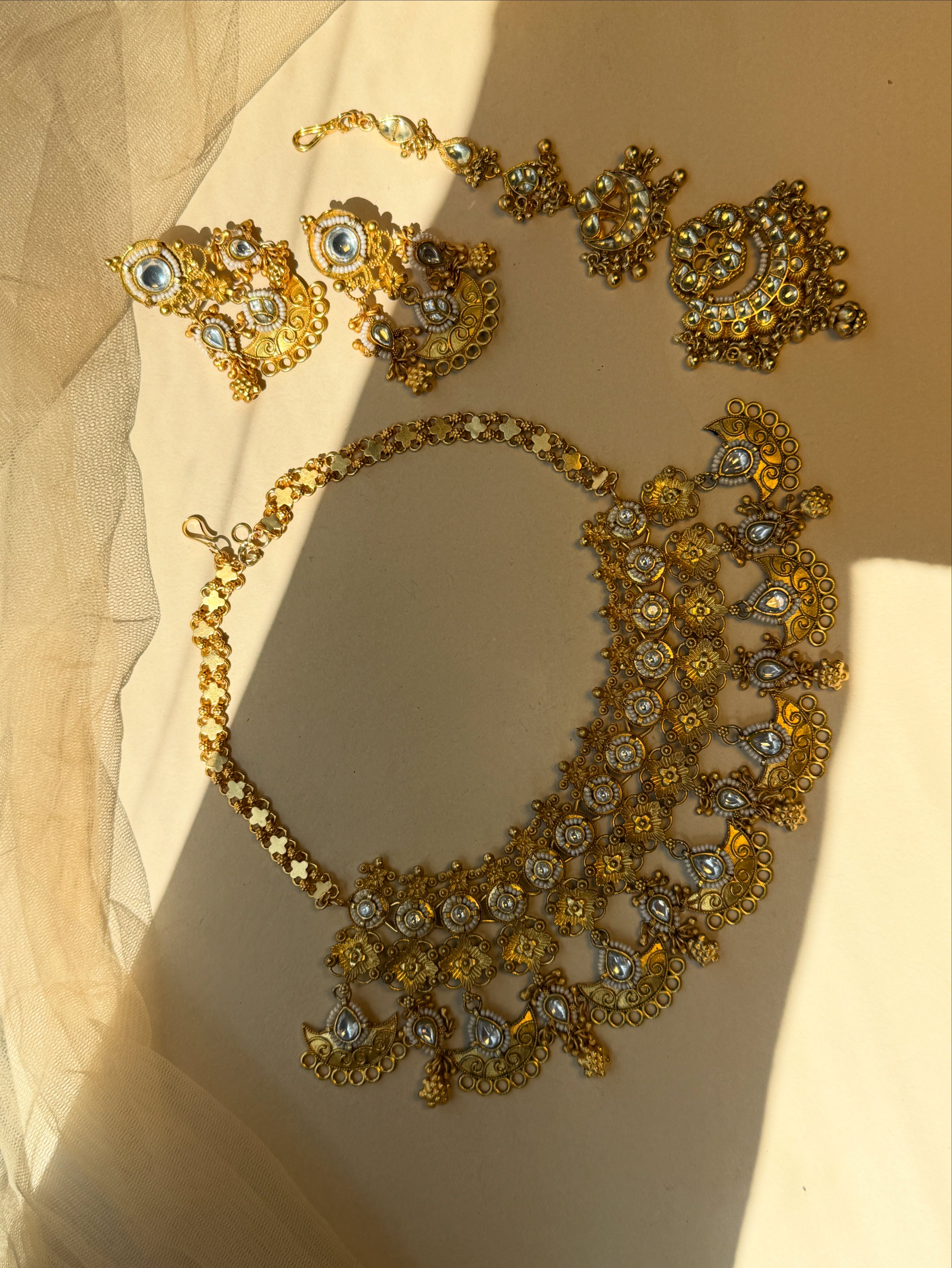
This is the set for the bride who wants everything coordinated and ready to wear — because it comes with a matching maangtikka, meaning the single most difficult jewellery-pairing decision of your bridal look is already made for you. The two-tone gold and silver heritage design is what makes this set genuinely modern: it works with warm-toned and cool-toned outfits equally well, which is rare in bridal jewellery. If you are wearing your necklace set across multiple functions with different outfits, this is the set that gives you the most flexibility without ever looking like a compromise.
Best for: NRI brides, brides attending multiple functions with different outfit colour palettes, anyone who wants a complete look with zero coordination stress, and brides who love the contemporary two-tone aesthetic.
Browse the full Necklace Set Collection →
7. How to Style a Bridal Necklace Set
Choosing the right necklace set is only half the work — the other half is styling it well with the rest of your look. Here is what our most experienced brides have taught us:
Let one piece be the hero
If your necklace set is heavy and elaborate — a full Jadau choker, for instance — keep your earrings smaller and your other accessories quieter. The biggest mistake brides make is wearing maximum jewellery everywhere at once. The eye needs one place to land. Give your necklace that space.
Match your maangtikka to your necklace, not your earrings
The maangtikka and necklace frame the face from opposite ends — the forehead and the neck. When these two pieces speak the same design language, the result is a cohesive, polished bridal look. Your earrings then sit in between and bridge the two, so they need to be compatible but do not need to be identical.
Consider your skin tone when choosing the metal
Warm skin tones (yellow or golden undertones) are complemented by yellow gold and antique gold. Cool skin tones (pink or blue undertones) are flattered by silver and white-gold tones. If you have a neutral skin tone — which most Indian brides do — you are fortunate: both gold and two-tone sets will look equally beautiful on you.
Think about the photographs
Wedding photographs are in both warm indoor lighting and natural outdoor light. Jadau and antique gold sets photograph beautifully in both — their textured surfaces catch light from multiple angles. High-polish sets can sometimes create overexposed flares in flash photography. If you are having an outdoor wedding with lots of natural light, matte and textured finishes will always photograph better than high-gloss.
Pair with your Chuda set and earrings from the same craft tradition
A Jadau necklace with a plain gold-plated Chuda set will always look slightly disconnected. When your necklace, Chuda, and earrings all come from the same design vocabulary — antique gold with antique gold, Jadau with Jadau — the look has a natural coherence that no amount of styling tricks can otherwise create.
8. Care Tips — Keep Your Necklace Looking New
A well-made bridal necklace set will last years if you care for it correctly. Here is exactly what to do:
- Keep away from water and moisture: Remove your necklace before bathing, swimming, or washing your hands. Even brief exposure to water can accelerate tarnishing on gold-plated pieces.
- Apply perfume and makeup before wearing: Chemicals in perfume, hairspray, and foundation are the enemy of gold plating. Let everything dry before putting on your jewellery.
- Store flat in a soft pouch: Necklaces stored in a pile tangle and scratch each other. Lay each piece flat in a separate soft cloth pouch or fabric-lined jewellery box. This is especially important for pieces with delicate Jadau stone settings.
- Wipe after every wear: Use a dry, soft microfibre cloth to gently wipe off skin oils, sweat, and product residue after each time you wear the piece. This single habit will double the life of the gold plating.
- Do not hang for storage: Hanging a heavy necklace stresses the clasp and can stretch or distort the chain links over time. Always lay flat or store coiled gently in a pouch.
- Check stone settings before major events: Before each wedding function, quickly check that all stones are sitting securely. Press gently — there should be no movement. If a stone feels loose, contact us before wearing rather than risking losing it during the event.
9. Frequently Asked Questions
What is the difference between a Jadau and a Kundan necklace set?
Both are traditional stone-setting techniques, but they differ in materials and finish. Kundan uses highly refined gold as the setting medium, giving it a warm, almost seamless gold-and-stone surface. Jadau uses a gold-plated base and often incorporates a wider variety of gemstones and beads. Kundan tends to look more polished and formal; Jadau often looks richer and more layered with colour. Both are equally valid choices for bridal wear — the decision comes down to your personal aesthetic and the weight of your outfit.
Can I wear a necklace set for multiple wedding functions?
Yes — and many brides do. The key is to restyle it slightly for each function. For your mehendi, wear just the necklace without the earrings and pair it with a more casual bindi. For your sangeet, add the earrings and a statement hairstyle. For the main wedding, wear the full set with the maangtikka. The same piece reads very differently depending on what surrounds it.
How do I know if a gold-plated necklace set is good quality?
Three things to check: first, the weight — a well-made piece will feel substantial, not flimsy; second, the plating at the edges and clasp — these are the areas where thin plating first shows base metal; third, the stone settings — press each stone gently and there should be zero movement. If the set passes all three checks, the plating quality is almost certainly good.
Should my necklace set match my earrings exactly?
They should be from the same design family — the same craft technique, the same metal tone, and the same overall weight. But they do not need to be identical. In fact, the most elegant bridal looks often use earrings that complement the necklace rather than copy it. Many of our necklace sets come with matching earrings already designed as a coordinated pair, which takes the guesswork out entirely.
Is a two-tone (gold and silver) necklace set appropriate for a traditional Indian wedding?
Absolutely. Two-tone jewellery has deep roots in Indian craft traditions — many heritage pieces from Rajasthan and Gujarat naturally combined yellow gold with silver or white metal elements. The modern two-tone aesthetic is simply a cleaner, more contemporary expression of that same tradition. If you love the look, there is no cultural reason not to wear it at a traditional wedding.
Do you ship necklace sets internationally?
Yes. We ship worldwide from our Surat workshop, with careful packaging to protect every piece in transit. For international orders, custom requests, or sizing advice, reach out to us via WhatsApp — we respond quickly and are happy to help you find the perfect set from anywhere in the world.
Written by the team at Mangalsutra Bangles — Shop No. 239, Rajhans Ornate Mall, Parle Point, Surat 395007. Crafting heritage-inspired gold-plated jewellery since 1992.
Complete your bridal look:
